Active Reflection vs Passive Consumption
I’ve decided that rather than while away my limited spare time watching photography videos, my evening would be better spent reflecting on my own successes and failures. Hopefully this will help me increase the former, and decrease the latter.
The Moment it Clicked
One of my all-time favourites is this photo of our cat Schoena:
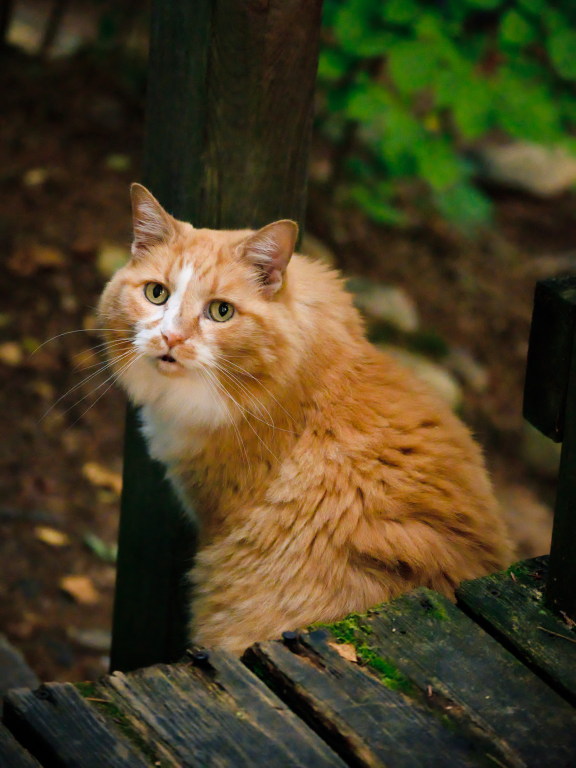
It was a very fleeting moment. Schoena was sitting on the back porch of the cottage as I stepped out the door. This is the look she gave me when she wanted me to follow her on an excursion. At home that usually meant to the bed or the couch for a belly scratch; at the cottage it meant out along the trail to one of her favourite hidey-holes.
The composition resonated with me and I quickly took a snap or two. That was as long as the moment lasted. Schoena turned and slipped under the deck, to emerge hours later for dinner.
The whole encounter only took a few seconds. Not long enough for me to pick appropriate settings. And sure enough, the settings were not ideal for this situation. I had my 50-250mm zoom set to 90mm, f/5, 1/1000s exposure, and ISO at 18000. I must have been shooting birds or dragonflies, and the ISO was definitely on ‘auto’, as I wouldn’t normally set it so high. But in the dark shade of the forest, that’s what I needed for this shot of Schoena. Had I had another few seconds I’d have dialed the shutter speed down to 1/250s, which would have allowed for a much more reasonable ISO of 4500 or so.
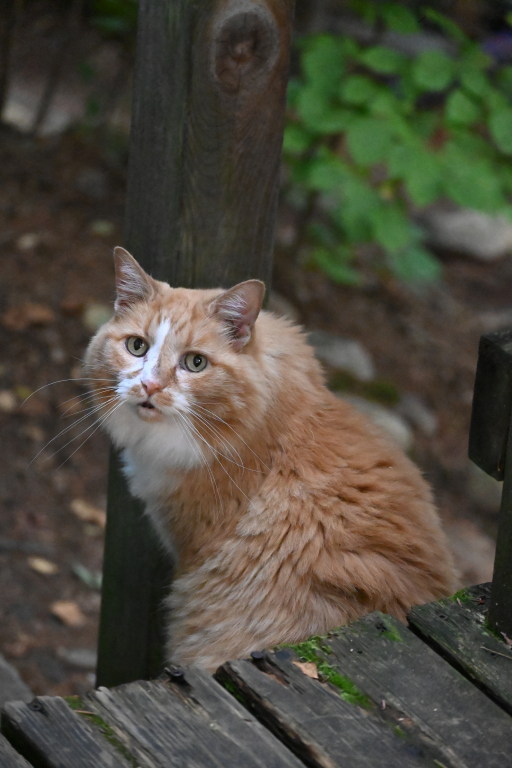
I didn’t think much more of the image, and the JPG file straight out of camera was washed out and noisy:
Processing
After Schoena passed away last summer I was looking through my albums of her, and came across this image. The pose was so characteristic, I thought I’d try processing it to see what I could do.
[Note: I didn’t think to save the processing steps as I did this, so I’ll just show a few of the key elements in isolation. All editing was done with RawTherapee]
First off, the noise was a big problem, a consequence of the high ISO:
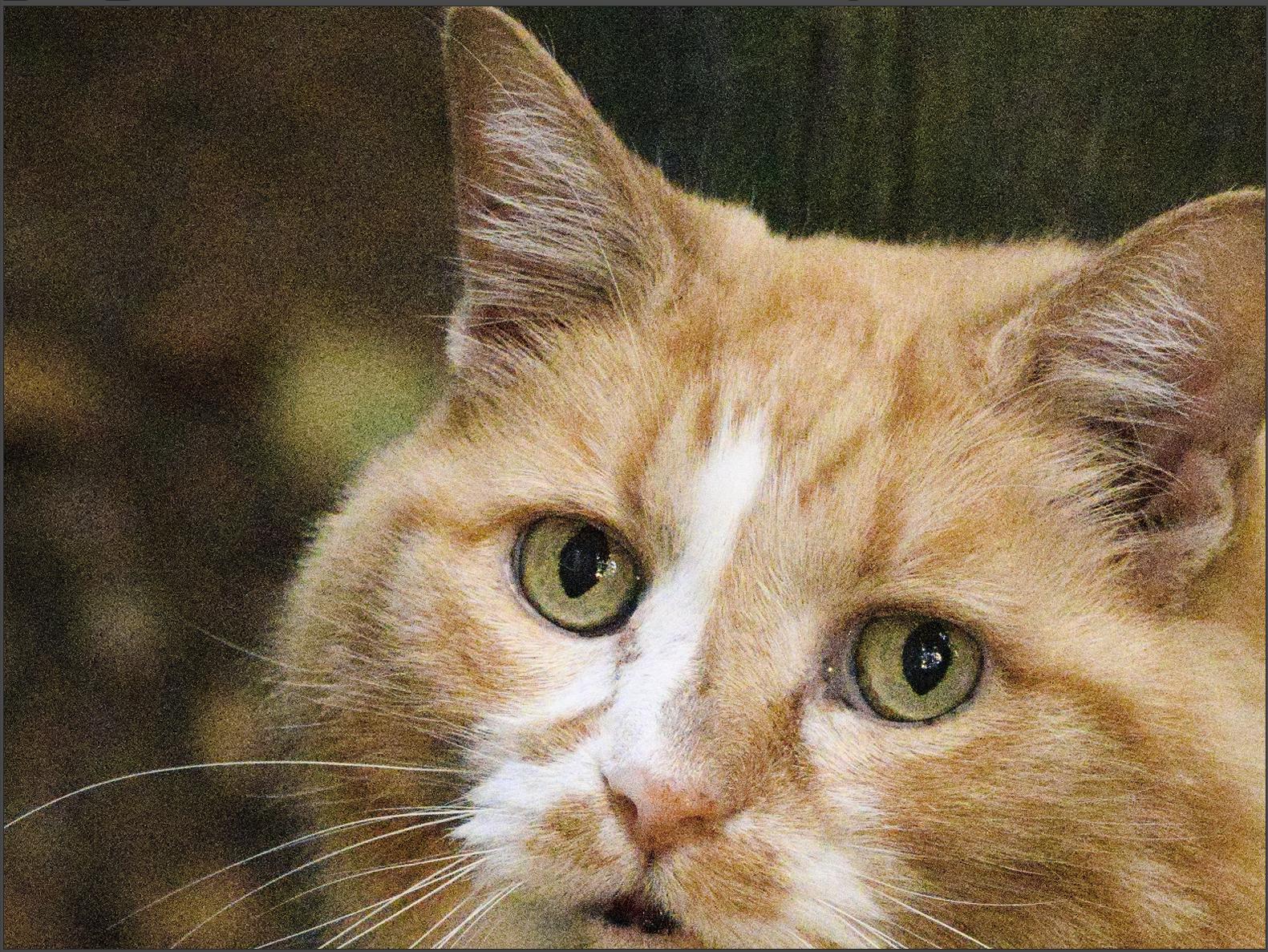
I used the Noise Reduction tool, with Luminance set to 82.18 and Detail Recovery set to 9.85. This made a big improvement:
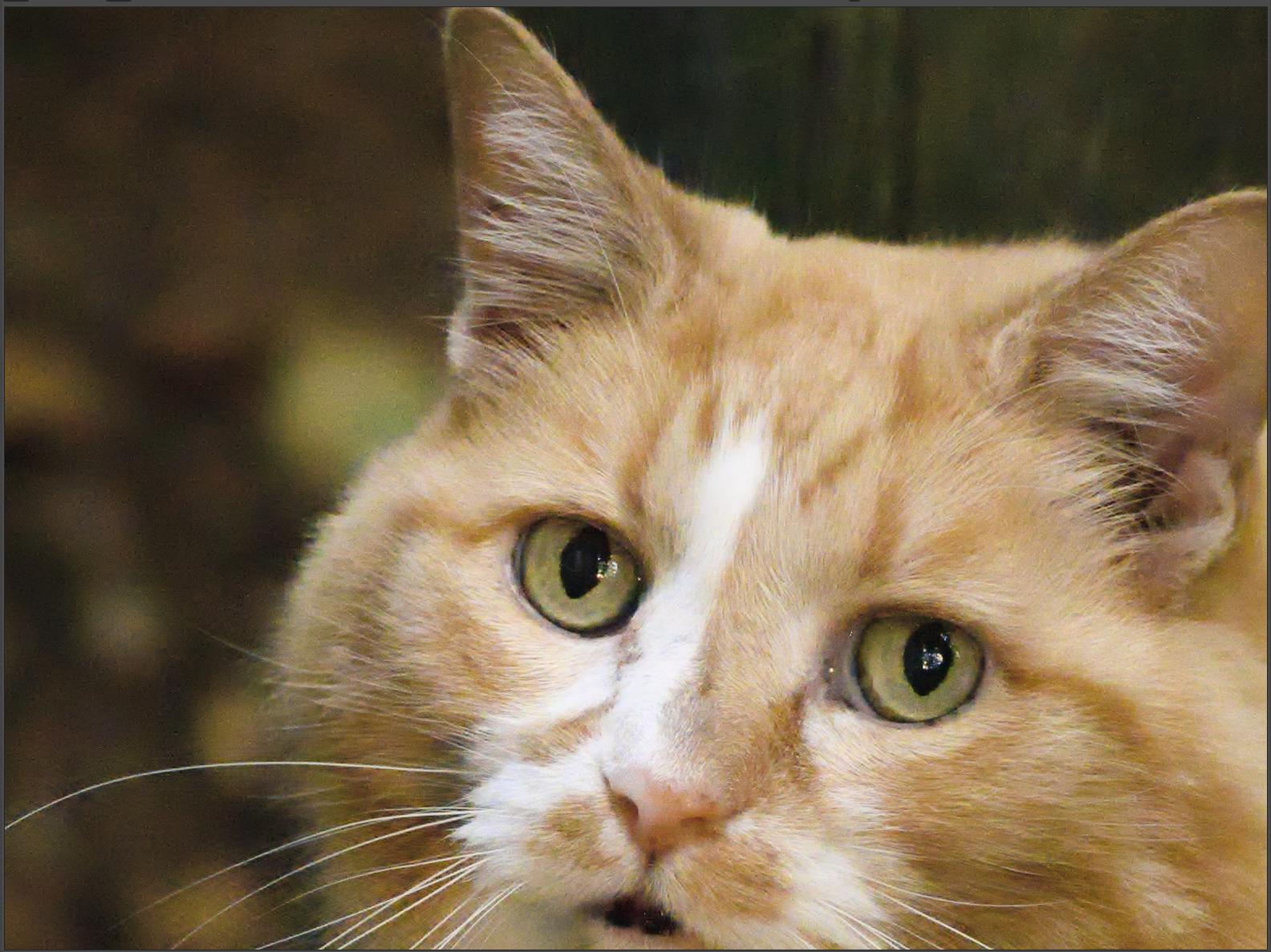
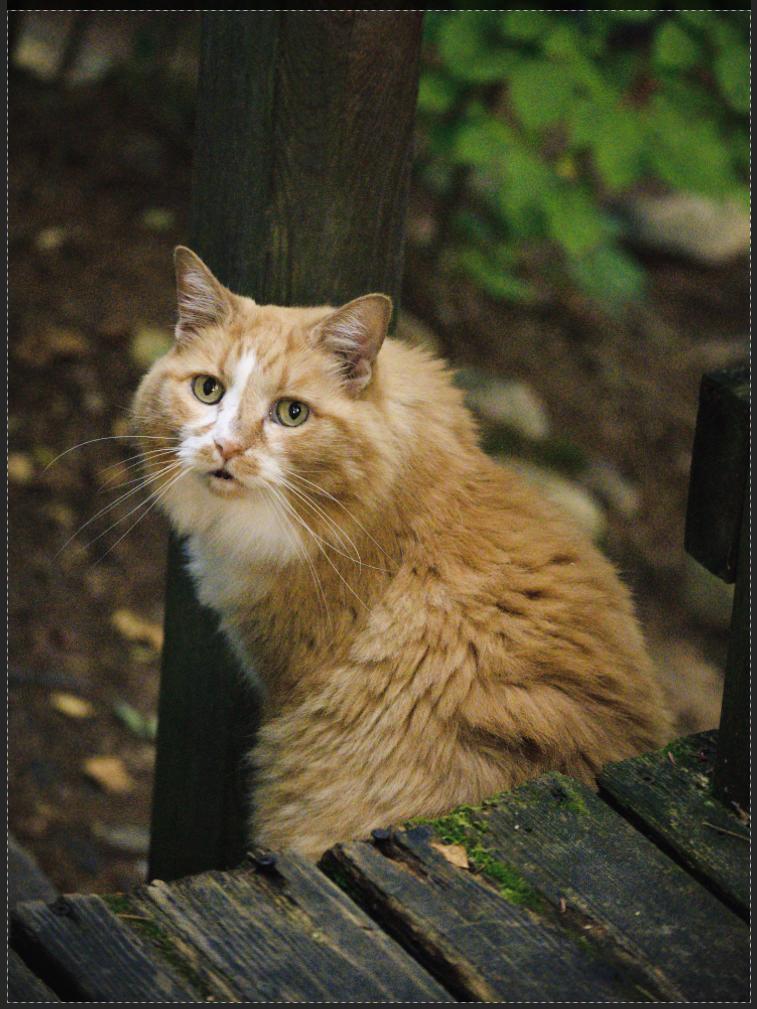
I also increased the colour temperature from 4100 to 5000. This warmed up the blue cast from the shady light:
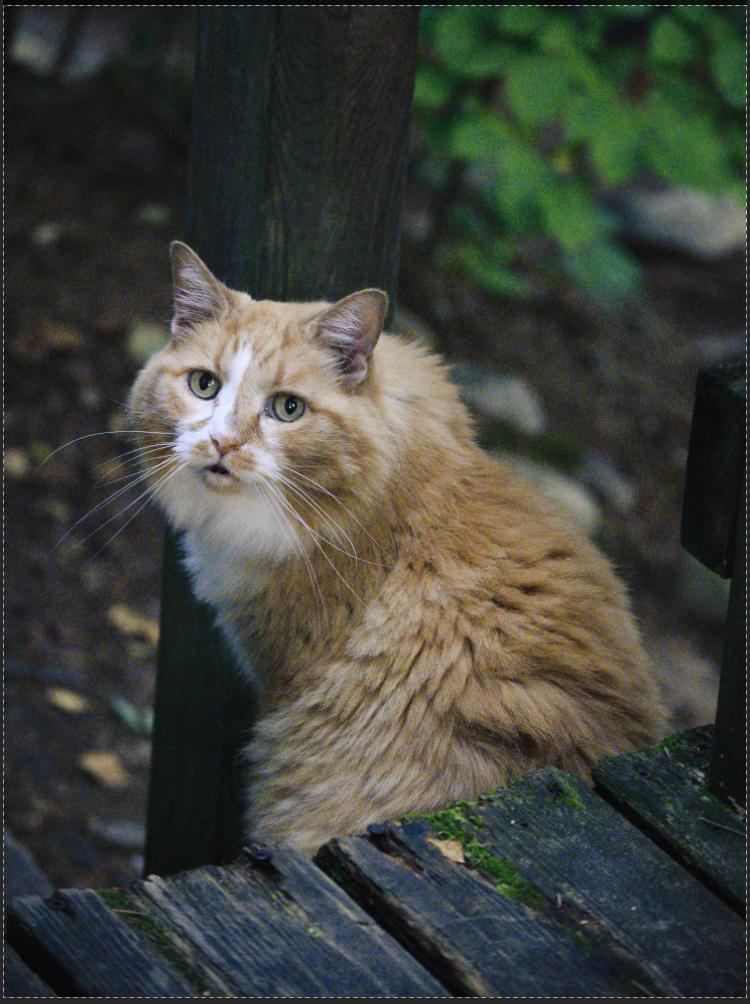
And the warmed up version:
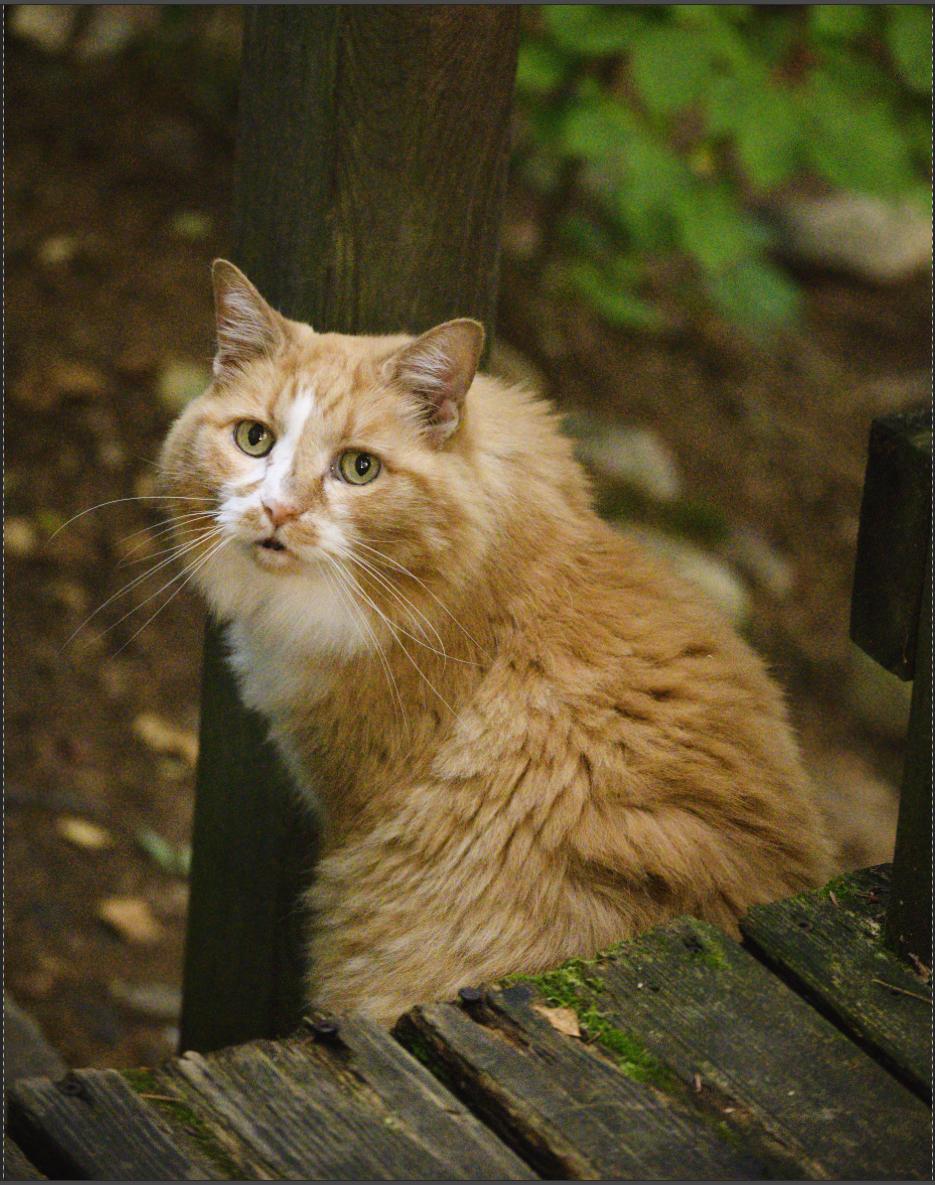
The last major adjustment I made was to colour-tone the shadows. This turned out to be quite straightforward, as Schoena is brighter (more luminous) then the rest of the image, making it easy to separate her from the background with a mask. Her colouring also meant I could get a ‘split-tone’ look with half the work - I only needed to add a bit of blue to the shadows, to set off her orange hue.
Here’s the original colour:
I turned on the Color Toning tool and set a mask based on Luminance:
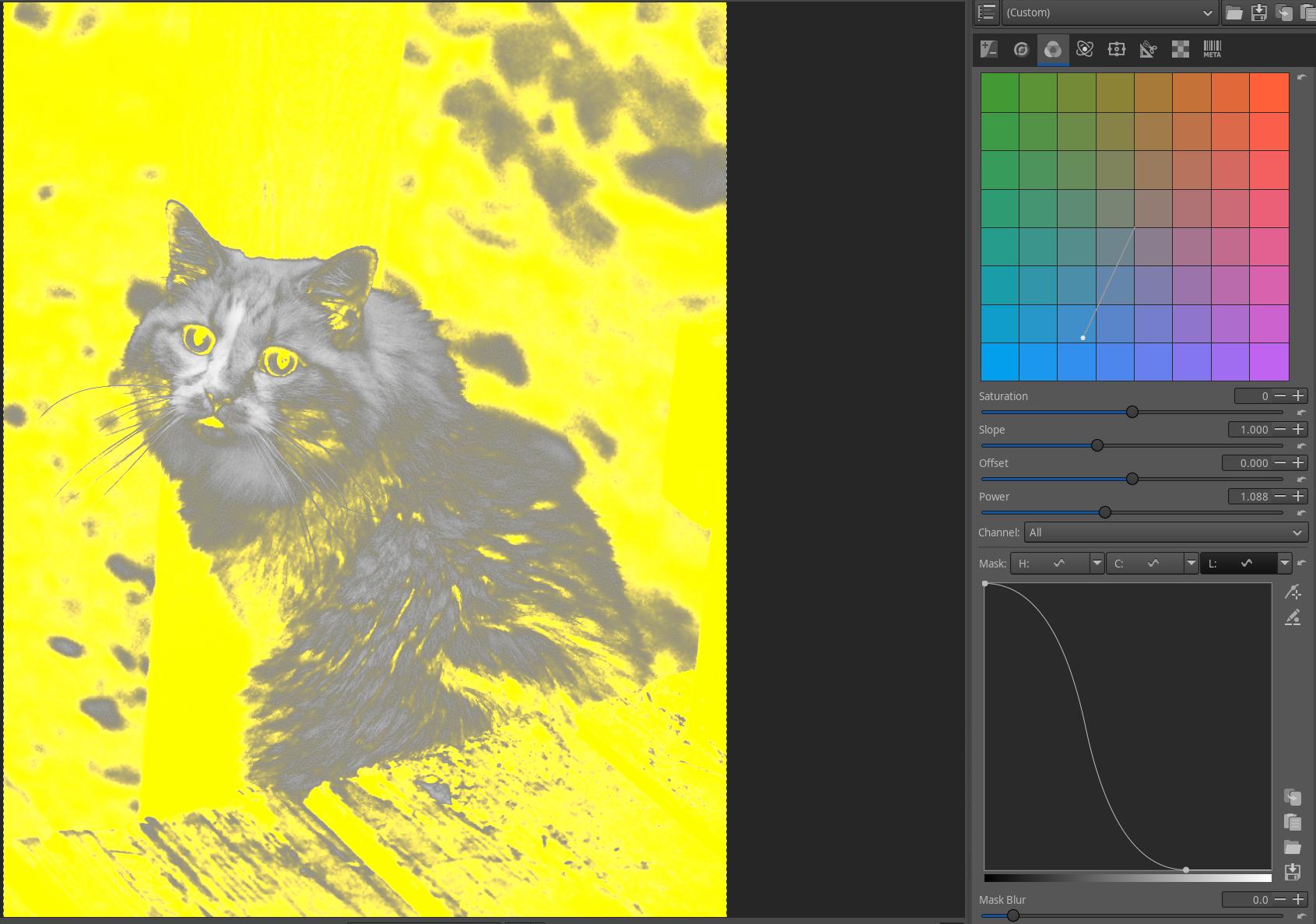
With the mask set I dialed up the blue hue. Which resulted in what I think is a very pleasing image:
Reflection
What makes this work
First, the honest, unguarded expression on Schoena’s face, with strong eye-contact. Something that comes from our shared connection. Clearly she trusts me, and is comfortable enough to share her space with me.
I enjoy seeing ‘street photography’, but there’s a certain kind of photo that I find really off-putting: candid moments, often taken with longer lenses, that put the viewer in the position of a voyeur surreptitiously stealing images of total strangers. I can see strangers any time I want. Actual connection with a subject (even if I don’t know them) makes for more impactful images.
Second, the composition. Given the brief opportunity, I’m pleased with how I was able to cradle Schoena above the worn wood of the deck, with strong but subtle lines from the boards and planks anchoring her in the center of the photo. I didn’t have a lot of time to deliberate on this, it’s more a visual muscle that I’ve been working on over the past several years.
Third, the quality of the light. Even though the light was relatively dim, the slightly brighter light on Schoena pulls her out from the background very nicely, especially after the edit. Again, catching this in a quick snap is mostly a matter of visual muscles rather than conscious deliberation.
What could be better
While I’m pleased to have been able to capture this image in the few seconds it was in front of me, if I’d been just a bit quicker the technical image quality could have been much better. I think there are two ways to approach that. First is anticipating subject and lighting, and keeping an eye on the settings on my camera. If I’d thought to check my camera when I picked it up, it would have taken a moment to switch from “birds in flight” mode to “quiet moment in the woods” mode.
And second, continuing to work on the physical muscles involved in adjusting settings on the fly. It’s slowly dawning on me that hobby photographers don’t generally practice their skills, other than (obviously) actually taking photographs. But just a few minutes a day changing shutter speed, aperture, focus mode, ISO, would likely pay dividends in reducing the time required to respond to surprises like this. Something to explore further.